
My frugal, no-student-loan path to a BSN
I'm on track to get my BSN (Bachelor of Science in Nursing) in about a year, and as long as all goes according to plan, I will walk away with my four-year degree and no student loans.

If you've been following along with my journey this whole time, you already know allllll about my path! But after working at my hospital with people who went straight for their BSN, I have realized that a lot of people do not know there's an alternative.
So, I'm writing it all down in case someone out there needs to know!
Why is a BSN important?
It is mainly important because while hospitals will hire you as an RN with a two-year degree, most require their nurses to get one within five years.
If you want to practice nursing long-term, you probably will need to end up with a BSN.
My path
I got my Associate of Nursing degree (ADN) from my local community college, which has a very highly rated nursing program.
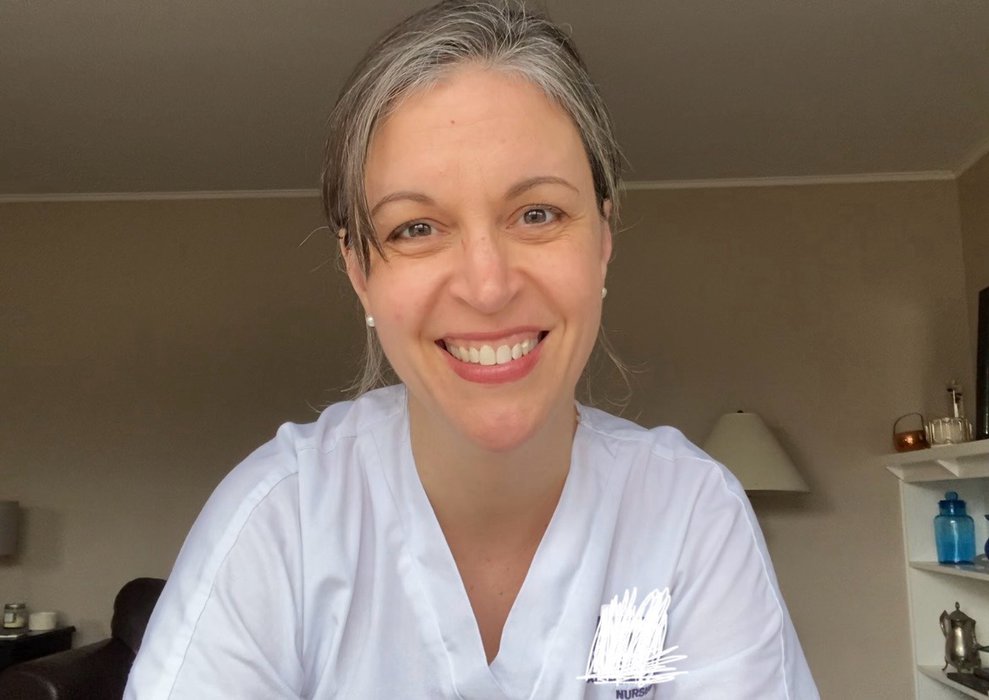
The whole program there cost me less than $15,000, which is a screaming bargain to start with.
However, I also filled out my FAFSA faithfully, and I applied for lots of scholarships. Because of that, I did not end up paying anything out of pocket for my RN degree, except for some things like clinical uniforms.
I also paid for my prereqs out of pocket, since scholarships do not usually cover those. I mostly did my prereqs one at a time, while Zoe was finishing up high school, so it was no problem to cash-flow them.
I took my NCLEX after graduating and passed it on the first try (my community college has an insanely high pass rate, near 99%).
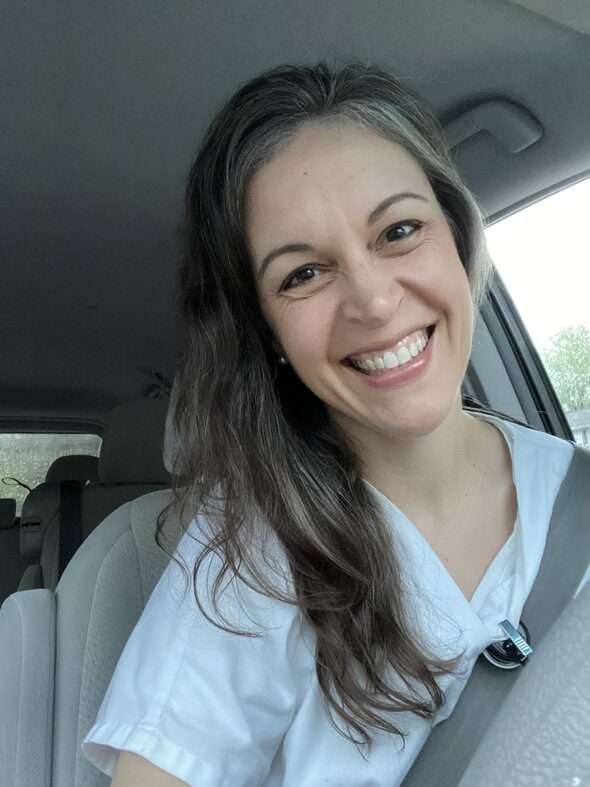
During school, I had worked (very) part-time as a tech at my nearby hospital, and after passing my NCLEX, I got a job as an RN there.
And here is where the financial magic really comes in: since I'd been a hospital employee for over six months (as a tech), I was already eligible for tuition reimbursement.
I started my BSN classes shortly after starting my RN job, and almost the entirety of my BSN program will be paid for by my hospital.
Plus, since I am already able to work a nursing job with my two-year degree, I'm earning a nurse paycheck while also going to school for almost free.
In summary: the benefits of getting an ADN first:
Quickest path to a paycheck
Getting a two-year nursing degree is the quickest path to getting a paycheck. And once you've got that going, you can take your sweet time with the BSN classes if you want; you will at least be already paying your bills with your nurse paycheck!
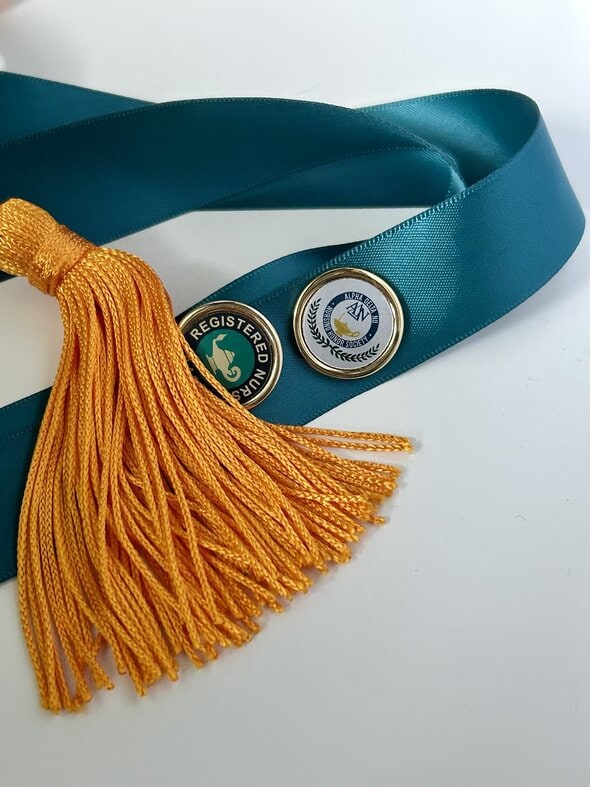
Your BSN will be free or close to free
Most major hospitals will pay for your BSN classes, and my goodness, that's like getting a nice, fat hourly pay raise.
You do typically have to stay at that hospital for a certain amount of time after the reimbursement, but at my hospital, only one year is required.
Plus, it's on a rolling basis. So, for example, tuition reimbursement for the semester I'm in right now will be fully "vested" a year from now.
No (or low) student loan payments
You make a decent amount as a nurse straight out of school, but some young BSN graduates really struggle to make it financially because of their student loans.
A nurse paycheck goes much further without a $900 loan payment.
And even if you have to take out loans to get your ADN, the amount will be tiny compared to the loans you'd need if you went straight for a BSN.
No one cares if your degree is piecemeal
Once you have your BSN, no one is going to give a hoot that your first two years were at a community college. It seriously does not matter.
No one cares if you start practicing with just a two-year degree
Two-year program grads take exactly the same NCLEX that BSN grads do, and they have to meet the same standards for things like required clinical hours. You can be perfectly qualified to take care of patients without having a BSN.
Community colleges can have very good nursing programs
People sometimes pooh-pooh community colleges, but seriously, my community college has a higher NCLEX pass rate than many four-year schools!
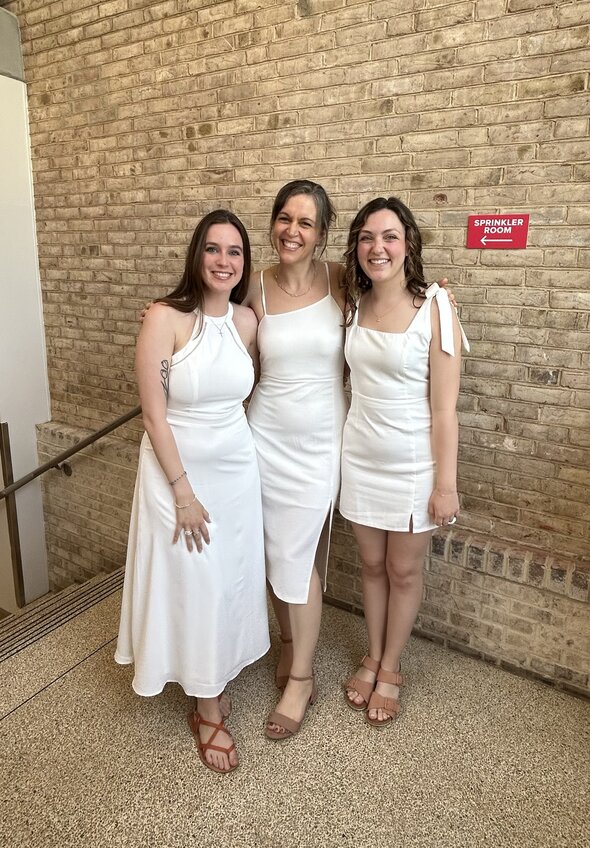
And my hospital unit educator said she actually loves to hire community college grads because she says they are usually ready to hit the ground running.
I know not every school is the same, but do at least check to see if your local community college has a good program. Don't sleep on the community college!
I know it's not the only way
There are some good reasons to go straight to a four-year nursing school (like if you have a full ride scholarship!). So, I'm not saying the path I'm taking is the only good way to become a nurse; I'm just throwing it out there as a solid, money-saving option for aspiring nurses. 🙂

This is a smart path. I know a lot of high school graduates might want the residential experience (which is what I had), but I can see now that it is probably is not always worth the $$ spent.
My flying son will be going the community college route for engineering. He had wanted to go to the university right away because he didn't want to have to worry about credits transfer issues (and possibly having to take an extra semester or two) and because the bigger school had so many co-curricular opportunities and better facilities for engineering. But. He also doesn't have $15,000 to spend out-of-pocket. Although he doesn't have his financial aid package from the community college yet, I know he will likely have $0 to pay. That's a huge difference. Now he has time to save money for the rest of his degree. Plus he has more opportunities to earn scholarships for the last few years of his degree.
Another plug for community college: my husband went to community college, then 3 years of college, then 4 years of seminary. No debt. I graduated with fairly minimal debt from college, but when I married him (after 5 years of teaching in public schools), I still hadn't paid off the loan. He ended up paying off my student loan with money he had saved from his summer jobs.
My mother taught math to nursing students at a community college. Her school has a reputation for turning out some of the best nurses in the city. I know a big part of their success rate is due to the quality of their professors. My mother earned her Ph.D. while raising a family, was the smartest person I ever met, and her colleagues were equally smart.
I also graduated from a local community college and then transferred on to earn my bachelor's degree at a local senior college. I came out of both schools debt free because I was able to work while earning my degrees, along with financial aid and savings. I also was a commuting student so I didn't have to spend on room and board.
While there is 0% chance I will become a nurse, I appreciate how much I'm learning about the profession. Thanks for sharing all the inside info.
I think student loans are some of the biggest ripoffs out there. I avoided taking one out, despite the fact my father was unemployed for over 4 years. Instead of the private, expensive private university in my town, I attended a state university and lived in an older, cheaper dorm. Tuition +room and board there were cheaper than the private college tuition alone. My mom was a school employee and for more than a decade, she worked summer school and banked the extra pay in a savings account. (The interest rates were much higher than today's.) That fully funded my freshman year. The other 3 years, I was a dorm worker and I would work extra weekend shifts for coworkers who had weekend jobs out of town, or other weekend plans, in addition to my own weekday and weekend schedule. I once worked 12 hour shifts on Easter weekend, and a pal brought me my lunch and supper. That dorm job pay plus the savings account paid for the bulk of my sophomore, junior, and senior years, although my writing also scored one journalism scholarship and a check for a newspaper article.
I never realized what a blessing it was to graduate debt free until I was well into my 30s. I'd bought a 3 BR 1 BA starter house and a car and a fun car, a 65 Mustang. I could afford vacations and was living well. This was in the 1980s.
In the break room one day, some coworkers were moaning about money. Most admitted their cars were hand me downs from Mommy and Daddy, or else they drove some real beaters.
My mortgage was less than they paid in rent -- and no, they couldn't buy a small starter house, they didn't qualify for a loan. All because they had these huge monthly payments on their student loans. With no end in sight.
Dave Ramsey warns against student loans: if you flunk out of school or don't get that high paying job, you still owe the money. Many of his callers have money woes caused in no small part by the student loans they got.
Don't completely write off private colleges/universities. I got both my BA and MA (nursing) at private Catholic colleges. I was also accepted at two state universities but was able to get basically full tuition scholarships from the private colleges - they had access to a lot of scholarships, etc that the state colleges did not. I could work outside of school enough to pay my other expenses. I would have had to take out student loans at the state colleges. Of course, this was a long time ago (the Internet was not around yet, I commuted 150 miles each way for my NP program classes and clinicals, typed my thesis on a manual typewriter, used the medical library at the hospital where I was working a lot, and paid my awesome child care provider about half of my take home pay - learned you can make anything work for 24 months)
By the way, many states have programs that let high school students attend community colleges and they can graduate with their HS diploma and an AA degree simultaneously. And for students who have been in the foster care system (including adopted from), some states will provide them with a paid post secondary education.
You can pass the NCLEX and prove you are qualified to be a nurse after 2 years, and yet 2 more years of schooling are required.
Those who do the 4 years of schooling and then take the NCLEX might possibly not pass it.
Sure seems like a lot of unnecessary schooling, since 2 years clearly prepared you. My suspicious side says that the universities are colluding with the loan companies.
I put myself through college, without any parental support, getting an associates degree at an excellent community college, which led to getting an academic scholarship to a private college that was still affordable then although I worked three part-time jobs to cover everything. It was hard, but I graduated with no debt.
Fast forward 40 something years and I was working in housing at a state university. So very many freshmen came in completely unprepared to live on their own, would fail out, and go home with student loan debt and nothing to show for it. So many of them would have done much better at community college and living at home until they matured enough to manage on their own. Even worse were the ones who got credit cards on their own and ran up debt on those before dropping out.
Such smart planning! I wish my grandson had started out with community college before going across the country to college.
I earned my BA with the help of a scholarship, work-study jobs, and help from my sister (financial and living quarters). I took out a student loan my final year, after I was married, and paid it off at a low interest rate. You used to be able to do that. My parents were unable to help, but I got it done, anyway!
After graduating, I went to grad school with an assistantship, which included free tuition and a small stipend.
But when it came to my library degree, I did have to charge my night and weekend classes. That was my experience degree!
Sorry, my expensive degree!
Hear hear! This is so wonderful to yell out to the world! My husband got his nursing degree from a 2-year school. With grants and scholarships, he paid about $4,000 out of pocket total. He worked as a bartender at night, while he was at school during the day (it's how we met, in fact!). We paid off his student loans as soon as possible after he graduated. Think it took 6 months.
Fast forward about 13 years, his daughter is now studying to become a nurse. Insisted on going to a fancy nursing school. She will graduate at the end of the summer with her BSN, but she will also have roughly $68,000 in student loan debt. Her payment will be over $1,000/mo. And I tried so hard to tell her that it didn't have to be that way. She said she had googled and that google told her that $68,000 was average for what people took out. And then refused to talk about it anymore.
I'm proud of her dedicated and getting this degree... but as someone who graduated undergrad without loans. And whose husband (and her dad) also graduated with nominal loans... this breaks my heart. It did NOT have to go this way. But... it was what she wanted. 🙁
Thank you for writing about this, Kristen. Because it's so important to know that sometimes the options that aren't marketed as hard are the better ones for frugality! (I can say this about many things in life, as a marketer myself!)
This is wonderful post. In my past life as a high school teacher, one of my jobs was to work with the AVID program: identified first generation college bound kids. I think the greatest fault of the program was not recognizing the value of community college. I get the theory. First generation college students have a horrendously high drop out rate from community college ( like 90%) . Once they leave high school they just don't have a motivating environment around them. However, a pathway like "just get two years in" with a nearly guaranteed job at the end is very helpful. No high schools are picking up the slack. We have pathways where a high school student can become a medical something before they even graduate from high school. They wear scrubs and everything around campus.
The old myth of going into a four year playground to produce America's best and brightest is many cases a luxury of illusion. Having said that, my only child had a highly academic curriculum requiring cutting edge sets of math, tech to get him to his current life as a mechanical engineer for Corning. Our school system did not provide the classes he would need. Something about a different Physics and calculas. We were so grateful to be able to pay his way even though University of Michigan even though we didn't qualify for any financial aid. ( Farmers are asset rich and cash poor.) it was the right choice for him.
There is a pathway of success for everyone and that is what make this country so amazing.
Typo Now high schools are picking up the slack.
Thanks to Kristen for her illuminating post in general and her shout-out to community colleges in particular.
And I add something I've said before: I think there also needs to be much stronger advocacy for young folks' going into the skilled trades (plumbing, electrical, HVAC, construction, etc.). I'm reminded of a conversation I overheard a couple of years ago at a library book sale in one of our ritzier suburbs: A father was saying plaintively that of his four children, the only one earning decent money as an adult was the one who turned down college and became a plumber!
Oh, and here's a P.S. to yesterday's FFT discussion of storing seeds from year to year: I just started some of the mini basil I grow for drying (large-leaf basil doesn't dry well), and I just noted that it's dated 2012. So if this seed germinates OK this year and next--and I have no reason to think it won't--I'll have a basil challenging the 15-year record for that packet of lettuce seeds!
A.Marie, our city has a campus of Texas State Technical College nearby. There are TSTC campuses dotted around our great big state. It is phenomenal! Students study such things as automotive mechanics, RV repair, laser technology, dental hygienist, golf course greens maintenance, HVAC, welding, aviation, instrumentation, electronics, computers, restaurant management and food prep (ie, being a chef), and many more. Maybe even plumbing, I'm not sure about that one. They usually spend only a year or 2 getting their training, and the school is so successful, that it has a guarantee: If you haven't found a job within your field of study 6 months after graduation, TSTC refunds all your tuition. Very, very few refunds are ever issued. That's not to say their vocational programs are easy, but the training is top notch, and the jobs are in great demand. I believe they accept nonresidents as well as Texas students so it may be something to check on.
Their website is tstc edu.
I just looked it up and there are even 100% online courses, and they are open to people working and taking courses.
I've often said TSTC is the best kept secret in Texas, but it shouldn't be. Please check it out to see what all they have!!!!!!!!
Hi! I am from Texas also. I went to TSTC- Harlingen for a year to get my prerequisites done. It was an amazing experience. I then transferred to another community college because my mom ended up sick and had to move back home but my year there was so much fun!. I met so many people still friends with them years later. Eventually got my political science degree from a four year college but I always recommend to people to check out TSTC!!
I love this post.
Here! Here! You more support/encouragement to consider the trades. I'd also love to hear from people about different career paths, how they got there, if their degree made sense, what degree they'd get if they could do it over and suggestions on how a young person could explore the option or get their foot in the door.
When I talk to my kids or young adults about future plans, there are SO many jobs and careers paths I know nothing about. Its silly to ask, do you want to be a teacher, nurse, plumber or fireman and then literally cant think of others options. Ha!
See my comments about TSTC.
Tstc.edu.
Their grads make amazing salaries!
My kiddos are teens, in a school that I think does a pretty good job of discussing lots of different career paths.
We emphasize the following:
1. What experiences would help you figure out your path?
- I encourage my kids to use high school to try lots of different things, And look for different experiences. For example, our high school has internships, experience days, emphasizes volunteering, etc.
2. What do you want to do 5 years after high school?
- I don’t agree with “what do you want to do when you grow up?” kinds of questions. No one I know now in my 40s is doing what they thought they would be doing while in high school. I do think it’s worth talking about what kind of life kids want to live in the first few years after high school, and especially after college if that seems like a likely path for that teen.
Do they want the kind of job that includes travel or independence? Do they like building things etch their hands? Working with small children or the elderly? Being outside? Live without near family, or further away? Do they have a health condition that means they need to make sure they have a stable job with decent health insurance? A hobby they want to plan to support?
Five years seems manageable. “The rest of your career” does not!
I love this post!
I mentor foster kids starting in high school. Do you all remember "what color is your parachute"? We follow this program and depending on their answers, we look at internships, Mike Rowe Foundation and local community colleges. Today, 5 Oregon community colleges announced a special 50 student accredited path to teaching. So exciting!
We also believe in military as a path, you can find your aptitude while in boot camp, start training and then get GI bill of about $30k tuition cap after 2 years of service or purple heart award recipients.
11 out of 19 of our foster kids chose this path. 3 are engineers, 4 are respiratory therapists and 4 are nurses, one is getting his DNP in Certified Nurse Anesthetist.
We also have plumbers, fire fighters and electricians and an HVAC tech. So proud!
You certainly should be proud! Congratulations to all of you.
What rewarding work you do. Thank you. My zozo was called by Navy and Marine recruiters but she was not interested. The military is an honorary career for sure.
Love this! I’m nearing the end of my second semester, of a 4-semester program.
I’ve had to pay very little out of pocket.
I started working right away as a home health aide when I started my pre-requisites, working about 12 hours a week, which completely paid for my classes, plus a bit.
I started working as a part-time tech at a local hospital during the spring semester before my nursing program started. That hospital actually has a special arrangement with several schools, including my community college, where they pay the school directly for my classes. I just have to get a letter of promise prior to the semester starting, and turn in proof of my grade at the end of each semester.
My employer requires us to have worked for 90 days before we can apply for the tuition payment. For part-time employees, they cover $5,000 every 12 months. My program is just over $2,000/semester, so this covers it entirely.
Full-time workers qualify for $10,000, so once I graduate with my ADN and pass the NCLEX, I’m hoping to get a job at the same hospital. There’s an online BSN program through a local university that has the same payment plan arrangement, and the whole program costs $10,000. They require new nurses to gain their BSN within 3 years.
I’ve already paid for one bachelor’s degree in my early 20s (BSE), I didn’t want to pay for another one! Because of that first degree, I also don’t qualify for anything from FAFSA. This way, my entire nursing degree progression will be paid for by my employer. 🙂
Several folks have asked why I’m not attending any of the larger universities in our area. The short answer: why would I pay $70,000+ for a BSN, or $50,000+ for a BS to BSN program when I can basically get the same degree for no cost to me?
So proud of you!!!
This is so important because the current administration has decided that nursing is no longer a "profession". Changes will take effect in July that greatly limit the availability of financial aid for nursing students, and new caps on borrowing for "non-professionals" greatly limits the ability of nurses to pursue higher degrees for the purposes of educating future nurses. We have huge nursing shortages in most areas of the country, especially rural areas--fewer people will be able to pursue nursing unless they follow a similar path as Kristen. This also impacts other allied health professions like PT, OT, Speech therapy, all of which require advanced degrees (masters or doctorate) for entry level certification. They are no longer considered "professions" either. As the average age of Americans continues to advance, this is going to impact everyone in the country. Whatever your political affiliation, it's important to recognize what is happening--even if you have no desire to pursue a nursing career, it will impact you.
Thanks for outlining a path for nursing education that can avoid student loans.
Raising a glass to you!!! So proud of your perseverance and proving to your employer how awesome you are! Way to go!!!
These professions are loan capped to $100,000. Good grief if a student graduated with that kind of load, my frugal mind just goes sizzle, pop and poof!
I'm a long retired OT (now in another profession) and I follow the Reddit boards for OT's. A lot of students are getting loans of upwards of $200k to get doctorates in OT. And as Traci points out, the incomes are NOT matching the debt. But who will teach the next generation of health professionals if people cannot afford the advanced degrees required to teach?
All these private programs have sprung up to crank out people with OT and PT degrees since they now require masters and doctorates. The costs are astounding.
I'm an OT and while I think the reduced loan amounts are going to have a terrible effect on the ability of many people to obtain health related degrees, I also think that it's ridiculous for a degree in occupational therapy to cost up to 200k or more. I work in an OT program at a university in a rural area where those who are already OT Assistants can go from an associate degree to master's degree in OT in approx. 2 years and it costs less than about 25k for in state students. OT salaries definitely do not make it cost effective to borrow 100-200k and most end up regretting it.
My daughter has decided she wants to be a nurse but none of the state schools offers the degree (decided after starting at state uni). So for now will get a kinesiology degree which 529 should cover, then go for an accelerated program. Financing on that yet to be determined :/ . We considered having her xfr to a different school but a lot of regional ones weren't accepting xfr students 🙁 . So....
Have you heard anything about the programs where you accept placement at a hospital that needs nurses (rural, etc) in return for tuition payment (forget what it's called - nurse corps?)
Nurse Corps scholarship program from the Bureau of Health workforce gives preferential to disadvantaged or with students with great financial need. Must be enrolled already in a 2 yr program. If you're interested, they have a newsletter and zoom presentations and q&a sessions. I worked with someone who spent years on the Appalachian Trail as a Maternity Nurse Mid wife and she loved it. They give you a little stipend to help towards living expenses.
thank you for this post. my zozo is an artist and she is going to a community college. if she does well it will be easier to go on to an art school. you should be so proud of yourself. you have accomplished so much and you educate so many through your blog. the photos here show how far you have come from the past. g-d bless you.
My city goverment job would reimburse 2 classes per semester if your degree plan was something that would apply to a city job. So nursing and med school would be out, but my business degree was fine. It was a nice perk!
Another point is that community college is often a fantastic springboard for getting back into the academic stratosphere when you're a "mature" student who hasn't taken classes in... "a while". Financially, physically, and mentally, it's a great way to get started, especially when you're starting close to zero (as I did) as a returning student. Plus, at least in my area, many community colleges have partnerships with state colleges/universities to transfer your prerequisite classes (especially if you receive an AA), along with a plethora of scholarship opportunities. This is the path I took (non-nurse, non-medical field), and I was also able to graduate without acquiring undergrad student loan debt.